Impact
20/03/2024
The vital imperative

Reducing CO2: acting quickly and decisively
Limiting CO2 emissions is an absolute priority, and so is the basis for our SBTi approach and our 5-year targets. We’ve long applied the same recommendations to our own digital for internal use as we do for our customers:

In 2024, we reduced our internal digital CO2 emissions by 20%, saving almost 238 tonnes of CO2 compared with 2023.
The Group has reduced its digital energy consumption for the 8th year running, by a factor of 3.8 since 2017. This is thanks to the implementation of our Ecocarbon solution, which measures the digital footprint in order to reduce it more effectively. We can thus attest to the positive impact on our internal practices.
Ultimately, our aim is to transform all our products and services (including our entire ecosystem of partners and suppliers) to make them part of a sustainable economy.
Our determination is real and we’re taking effective action. In France, for the first time in 2023 almost 100% of our electricity will come from renewable energy sources! This will be the case for the whole Group by 2023. This is one of our strategic objectives.
since 2012
We’ve been complying with UN requirements and since 2018 with IPCC recommendations to measure and reduce our emissions.
For the past 3 years we’ve been measuring 100% of our scope 3 for the Group with our partner Greenly. The aim is to have complete figures to meet the requirements of our SBTi commitment, while taking changes in scope into account.
Including changes in scope in 2022, our Group carbon footprint was 877,000 T EQT CO², with a complete Scope 3 across our entire value chain. We’ve made our SBTi commitments for the next 5 years on this basis.
Interview de Stéphane Palermo
Travailler ensemble en bonne intelligence
Stéphane Palermo Interview

Working together intelligently
“We’re working on the lifecycle of hardware and its re-usability, its carbon footprint, and new adapted production processes. We inform our customers and the market of our objectives and actions to limit travel and reduce logistics flows, using non-polluting vectors.
Confidence is built on the intelligence of effort and the measurement of results. Good faith is fundamental to establishing a relationship of trust with a customer.“
3 Scopes for impact
A universal classification
In order to measure its carbon footprint, Econocom analyses greenhouse gas emissions from its own activities and those of its suppliers, partners and service providers.
Emissions are universally and systematically classified into 3 main categories, known as Scopes 1, 2 and 3.
Scope 1
reflects our direct GHG emissions , i.e. those produced by fossil fuels (gas, oil, coal)
Scope 2
reflects indirect emissions linked to energy produced outside the company, mainly linked to the production of cold or heat
Scope 3
relates to indirect emissions from suppliers
It’s clear that it’s easier to act quickly on Scope 1 than on Scope 3. For the latter, our suppliers commit to producing their carbon footprints and adopting plans for concrete measures to reduce their emissions. 70% of the world’s supply chains are SMEs, and only 15% of them publish their CO2 and GHG emissions. This is where the challenge of reducing Scope 3 lies for responsible companies.
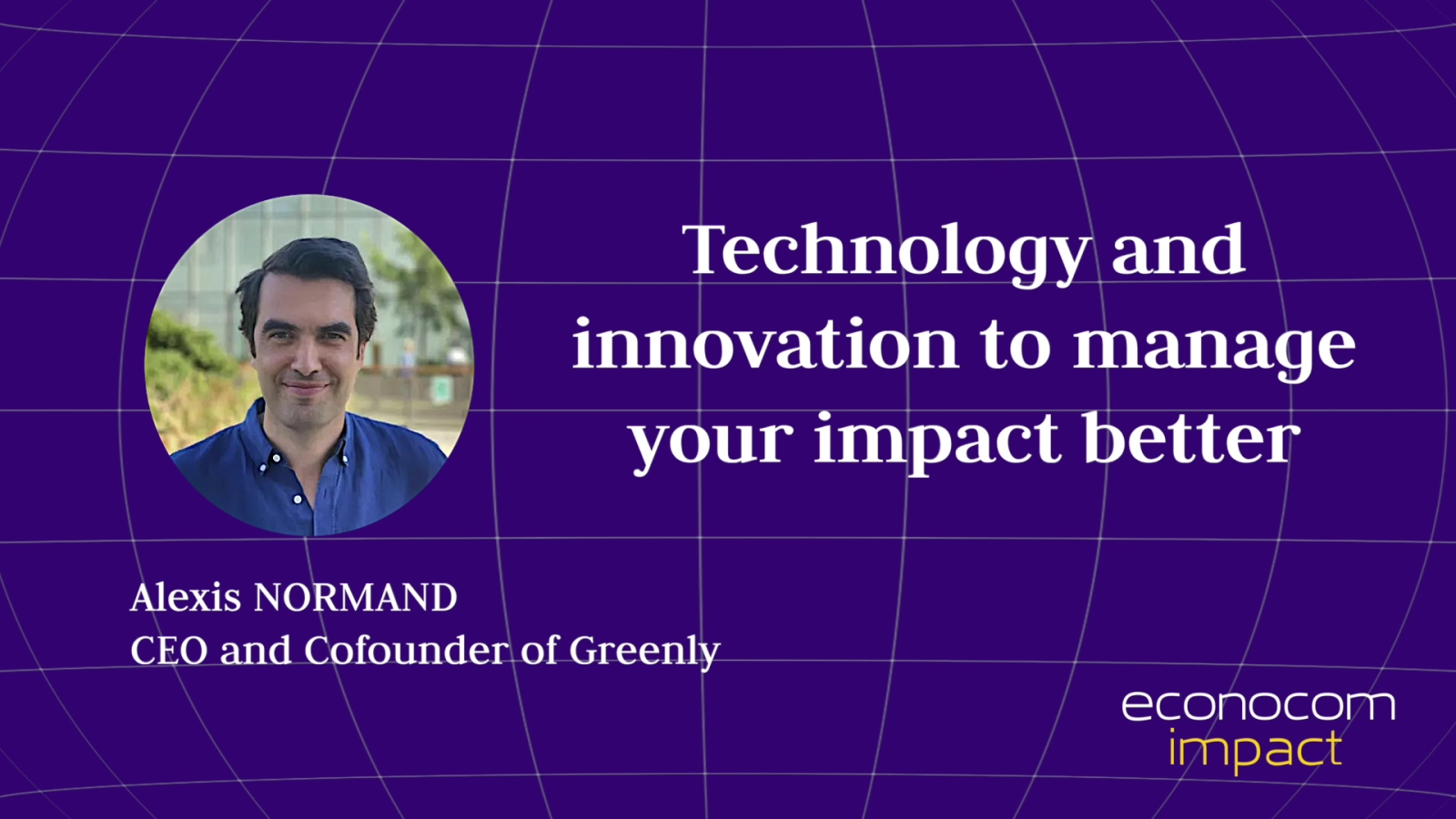
Alexis Normand Interview
Precise quantification for action
“Collective intelligence, innovation and boldness are the key factors in reducing emissions of companies. Tracking your data and getting rewarded for your “virtuous” actions is the best way to change behaviour: it’s a way of ensuring the sustainability of your business in a Net Zero world.
Audacity today means technological innovation as much as changing world trade rules to curb trade in carbon-intensive products.“